
2026 Facts and Figures through a GI Cancers Lens
.png)
Earlier this week, the American Cancer Society released its 2026 Facts and Figures, an annual publication that gives a big-picture update on cancer diagnosis and mortality across nearly every cancer type.
The major headlines covering the publication have highlighted hopeful news: between 2015-2021, 70% of cancer patients live five years or longer. This is dramatic when compared to the mortality rate in 1991; we’ve seen a 34% drop in cancer-related deaths. The number of older adults getting diagnosed with colorectal cancer and dying from it is decreasing. It’s also notable that liver and rectal cancer patients are living longer after a diagnosis.
The report shows that even those diagnosed with metastatic cancer are living longer overall.
This is definitely something to celebrate.
However, as the GI cancer community knows, if you zoom in on our specific cancer types, the story is not as celebratory.
Alongside the great news of cancer patients living longer, overall, and the decrease in some cases, is the grim reality that some GI cancer types are continuing to see an increase of cases and deaths despite advances in screening and precision medicine.
Several GI cancers are seeing unexplained cases amongst young adults.
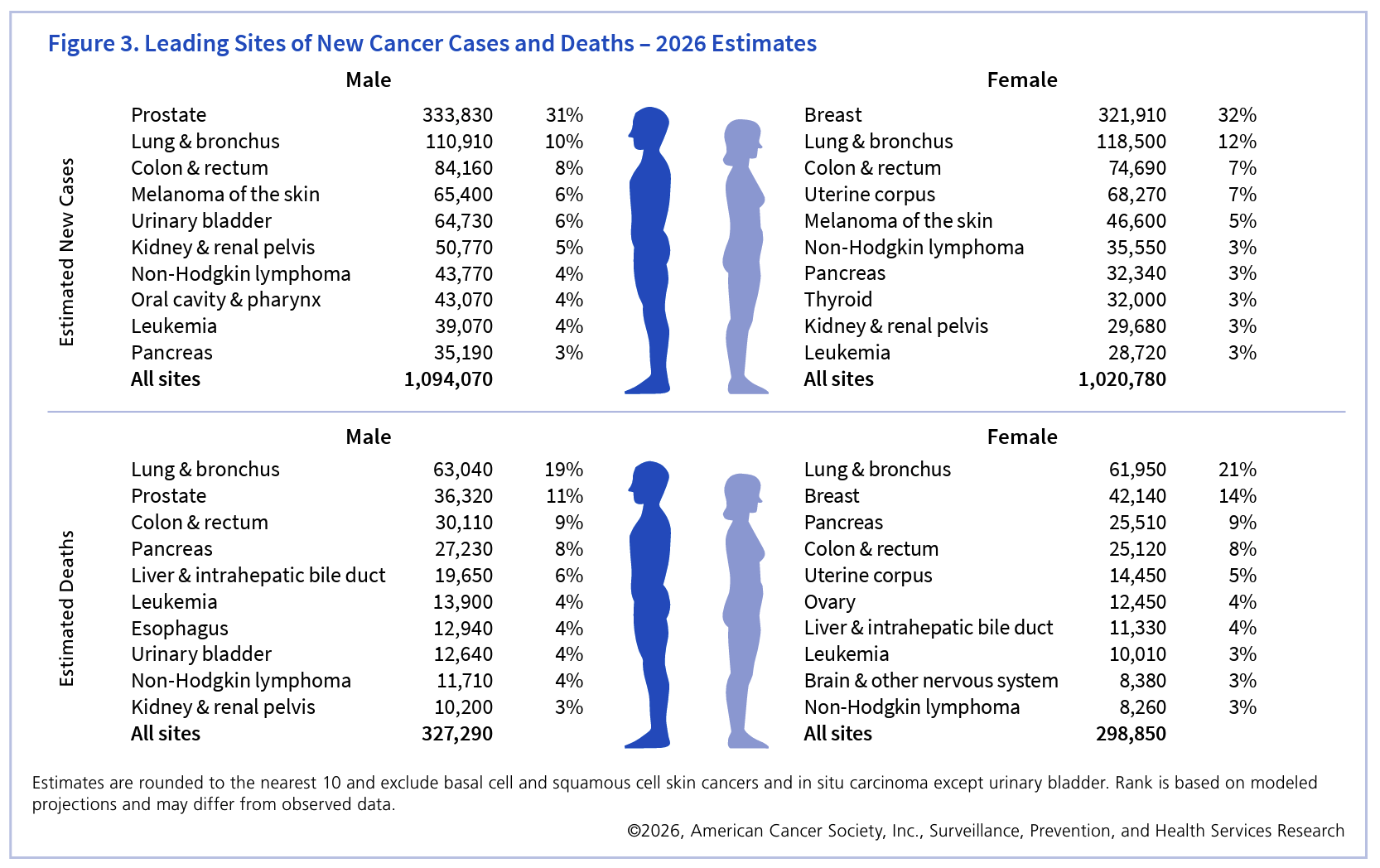
Colorectal cancer remains a top cancer people are being diagnosed with and dying from, despite numerous prevention strategies.
The number of pancreatic and liver cancer patients is growing.
Liver cancer is grouped as both primary liver (HCC) and cholangiocarcinoma in the report, and alongside pancreatic and esophageal, they’re on the list of the Top 10 deadliest cancers.
Health Disparities
A concerning trend in the report is found within health disparities and the prevalence of GI cancers amongst these patients:
- “Incidence and mortality in American Indian and Alaska Native (AIAN) people are approximately twice that in White people for cancers of the kidney, liver, stomach, and cervix, and 45% higher for colorectal cancer.”
- “High rates of colorectal cancer are partly driven by the extraordinary burden among Alaska Native people, who have the highest incidence and mortality in the world.”
- “Although Asian American, Native Hawaiian, and Other Pacific Islander (AANHPI) people have the lowest incidence and mortality for the most common cancers, rates are 30% higher for stomach cancer and double for liver cancer compared to those in White people, with an even larger disparity for Native Hawaiian and other Pacific Islander people specifically.”
- “Compared to (non-Hispanic) White people, Hispanic people have lower incidence for the most common cancers, but approximately 40% higher incidence of cervical cancer and almost 2 times higher incidence of stomach and liver cancers, all of which are largely preventable.”
What can be done?
The report left us with a clear picture of both hope and work to be done–especially within the GI cancers community.
We need improvements in ways to identify cancers earlier, when they’re at the most treatable stages. We need more effective treatments for GI cancers.
And while the burden of scientific advancement often falls on our doctors and researchers, there are steps patients can take to reduce their risks. Vaccinations for HPV and hepatitis b can reduce anal cancer and liver cancers, respectively. Quickly treating infections like H. pylori and conditions like reflux can also help reduce cancer risk.
The report highlighted that:
“At least 40% of newly diagnosed cancers in US adults — about 850,000 cases in 2026 — are potentially avoidable, including the 19% of cancers associated with cigarette smoking, the 8% associated with excess body weight, and the 5% associated with alcohol consumption.”
Smoking
Tobacco continues to be the top carcinogen, yet it’s the most preventable cause of cancer. The report found that in 2023 “about 49 million adults (20%) used a commercial tobacco product, including combustible products, e-cigarettes, and smokeless tobacco.”
All forms of tobacco—including smokeless tobacco–can increase cancer risk. By avoiding use and/or engaging in a cessation program, you can reduce your risk of several cancers.
Alcohol
The report is clear that drinking alcohol also increases cancer risk, especially in the esophagus, liver, colon, and rectum. Research has shown that to prevent cancer, avoid alcohol and if you do choose to drink, limit it to two drinks/day for less for men or one drink/day or less for women.
Obesity
Last, over half of the GI cancers we represent are found on the list of top cancers attributable to excess body weight: gallbladder, esophagus, liver, pancreas, stomach, colon, and rectum.
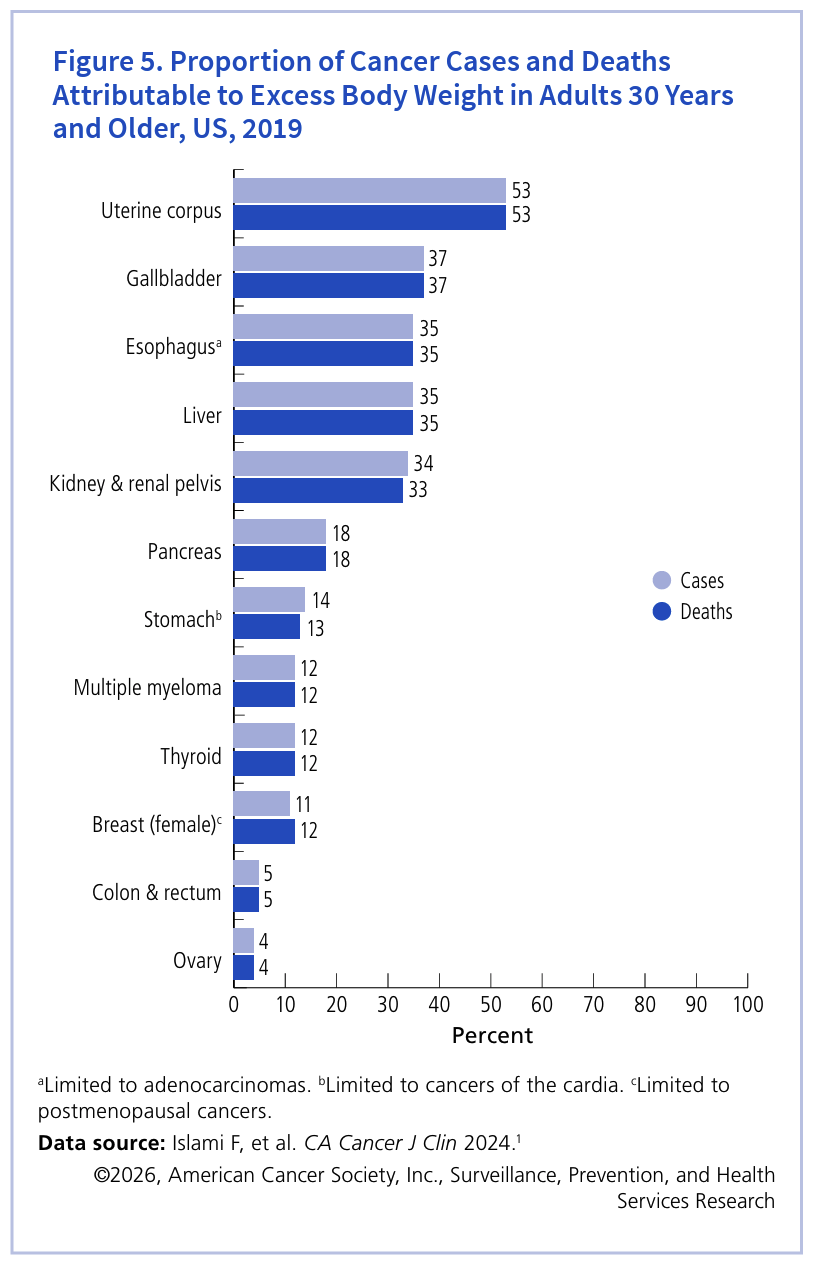
Obesity continues to drive many diseases in patients around the globe, including cancer. Weight management is an important step for those seeking to reduce cancer risk. Physical activity can play a complementary role.
The report highlighted,
“Physical activity decreases the risk of cancers of the colon (but not rectum), female breast, endometrium, kidney, bladder, esophagus (adenocarcinoma), and stomach (cardia).”
We also understand that obesity is a disease itself, and many patients struggle with weight loss.
To that end, there were several studies coming out of GI ASCO 2026 this past month about the role of GLP-1 medications, like this one about GLP-1 receptors reducing colorectal cancer risk, and the positive impact they may have on cancer patients and cancer prevention. We hope this is only the beginning of cancer research into this important, emerging topic.
We are thankful for the tireless work of researchers who track and collect patient data to offer these annual insights, and we remain united with our members to help patients of all GI cancer types both reduce their risks and live as long as possible.




.jpg)