<
Education

Test Your Biomarkers

just diagnosed

Why Biomarkers?

Before beginning a treatment plan, it's important to ask about biomarkers. Biomarkers can help you understand what your tumor is made of, and they can also let you know what treatments you may qualify for or which treatments are unlikely to work. Many clinical trials are designed around biomarkers. Biomarkers are the backbone of personalized medicine.

LEARN

Biomarker Basics

What are biomarkers?

Who will test my biomarkers?

How do I get biomarker testing?

Why should I get tested?

When should I get biomarker testing?
FAQ Image
Icon

Test first. Test early. The best treatment for your cancer is personal.

Icon
Biomarkers are the backbone of personalized medicine.
Clinical Trials

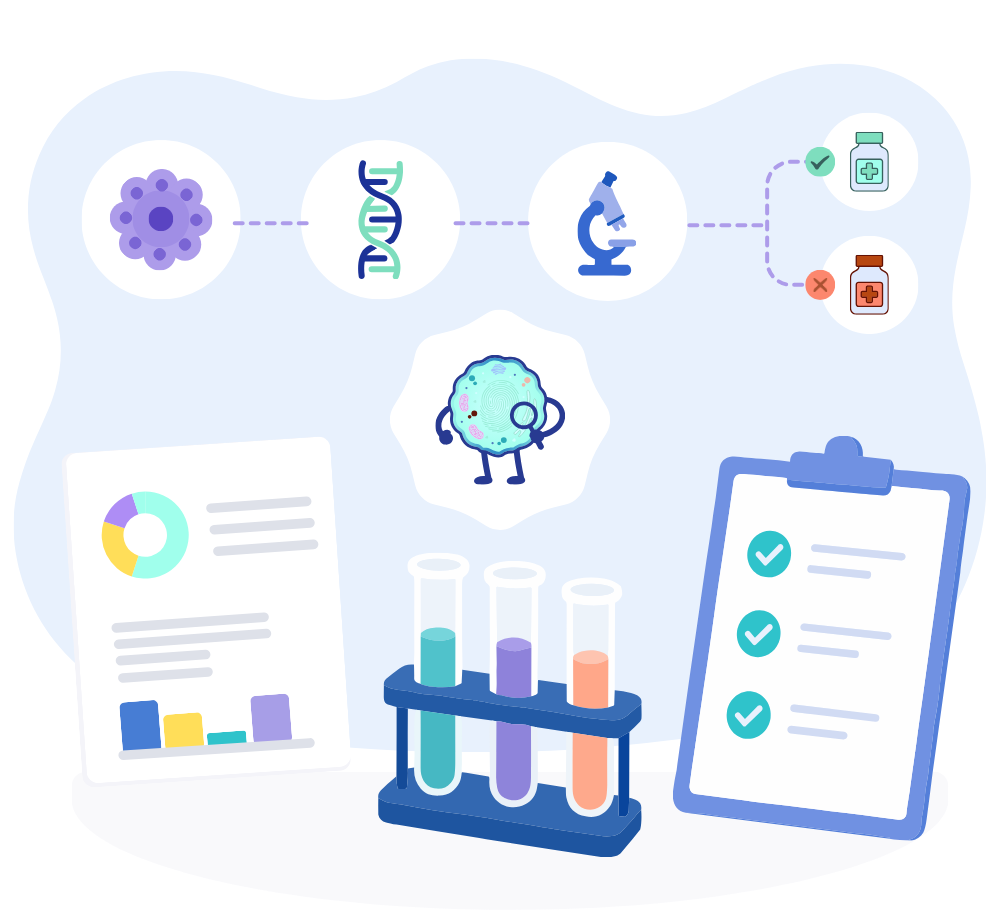
Most clinical trials exploring new cancer drugs will require biomarker testing. Clinical trials are where up-and-coming biomarkers become star players, where experimental approaches to treating a cancer become the standard-of-care. Clinical trials are truly the future of medicine. There are clinical trials available for patients of every GI cancer type and nearly every biomarker.  

Q&A

Biomarkers and biomarker testing

How much does it cost?

Is this the same thing as genetic testing?

What if I already started treatment?
Actionable biomarkers impact a treatment plan now, oftentimes there’s an FDA-approved drug associated with the biomarker.

HBV/HCV

HBV or HCV infections can impact liver cancer patients’ risk and treatment plan.

AFP

Monitoring primary liver cancer patients and predicting treatment response.

CLDN18.2

CLDN18.2-positive can make some gastric/GEJ patients eligible for targeted therapy and qualify others for clinical trials.

IDH

A mutation in the IDH gene can make cholangiocarcinoma patients eligible for targeted therapy and clinical trials.

NRG1 Fusion

A fusion with NRG1 can make pancreatic patients eligible for targeted therapy and qualify others for clinical trials.

FGFR

An alteration of an FGFR gene can make some cholangiocarcinoma patients eligible for targeted therapy and qualify others for clinical trials.

HRR genes

A mutation in an HRR gene may make pancreatic cancer patients eligible for targeted therapy and qualify others for clinical trials.

PD-L1

High PD-L1 can make gastric/esophageal/GEJ cancer patients eligible for immunotherapy and others eligible for clinical trials.

RAS mutations

A mutation in genes like KRAS or NRAS can impact eligibility for targeted therapy.

EGFR

Metastatic colorectal and pancreatic cancer patients may be prescribed anti-EGFR therapies.

PIK3CA/mTOR pathway

A mutation in the PIK3CA gene may impact gastric and colorectal cancer patients’ treatment plans and qualify others for clinical trials.

NTRK Fusion

A fusion with an NTRK gene can make patients eligible for targeted therapy.

RET

An alteration in the RET gene can make patients eligible for targeted therapy.

HER2 (ERBB2)

An overexpression of HER2 can make patients eligible for targeted therapy and immunotherapy.

TMB

A high TMB can make patients eligible for immunotherapy.

BRAF

A mutation in BRAF V600E can make patients eligible for targeted therapy.

DPYD

A deficiency in the DPYD gene means the body lacks proteins needed to break down 5-FU or capecitabine.

HPV

There are hundreds of strains of HPV, only a few are high-risk and cause cancer. It's important for anal cancer patients to get tested.

MSI-H/dMMR

Microsatellite instability (MSI-H)/mismatch repair (dMMR) can make patients eligible for immunotherapy.

Emerging biomarkers are showing promise in clinical trials and may impact treatment plans in the future.

DAXX/ATRX/MEN1

These tumor suppressor proteins are common in pancreatic neuroendocrine cancer

MUC1

An overexpression of MUC1 could qualify patients for clinical trials.

EBV

A virus that can create a unique subtype of gastric cancer.

CTC

Evaluating cancer cells in the blood to make predictions and monitor progress.

CDKN2A/B

A mutation in the CDKN2A/B gene may qualify patients for clinical trials.

TP53

A mutation in the TP53 gene may qualify patients for clinical trials.

Wnt pathway

A mutation or overexpression in a Wnt pathway gene may qualify patients for clinical trials.

POLE / POLD1

POLE/POLD1 mutations can make patients eligible for immunotherapy clinical trials.

MET

An alteration in the MET gene can make patients eligible for clinical trials.

ctDNA

Testing the blood for evidence of cancer.

GNAS

A mutation in the GNAS gene may qualify patients for clinical trials.

TIL

Metastatic patients may qualify for TIL therapy clinical trials.

"I went from Stage IV cancer to a 12-year survivor. My advice? Be the captain of your own ship. Don't fight the mental battle alone—find your community and your hope."

Steve Melen

DIAGNOSIS:

Stage IV stomach cancer

Read their story
Steve Melen

"Being generally healthy, it came as quite a shock that I had Stage IV stomach cancer..."

Javier Florez

DIAGNOSIS:

Stage IV Gastric Cancer

BIOMARKER:

HER2 (ERBB2)
,
Read their story
Javier Florez

"I am the mother of two young boys, and at first thought my symptoms could be attributed to a common intestinal bug going around our community."

Lauren Donithan

DIAGNOSIS:

Stage IV hereditary diffuse gastric cancer

BIOMARKER:

PD-L1
,
CLDN18.2
,
Read their story
Lauren Donithan

"I suffered from stomach pain and dysphasia, but didn’t seek care until those symptoms intensified..."

Suzanne Ottinger

DIAGNOSIS:

Stage IV

BIOMARKER:

TMB
,
Read their story
Suzanne Ottinger

"Doctors said they thought the condition had been progressing for four or five years."

Bruce Shipman

DIAGNOSIS:

Stage IV Gastroesophageal adenocarcinoma

BIOMARKER:

HER2 (ERBB2)
,
Read their story
Bruce Shipman

"My struggles with stomach problems and gastrointestinal issues started when I was in high school..."

Uroosa Khalid

DIAGNOSIS:

Stage IV stomach cancer

BIOMARKER:

MSI-H/dMMR
,
Read their story
Uroosa Khalid

"Because I did have biomarker testing and tested positive, I was able to participate in this clinical trial..."

Terri Brady

DIAGNOSIS:

Stage IV cancer in the GI junction of the esophagus and stomach

BIOMARKER:

HER2 (ERBB2)
,
Read their story
Terri Brady
You are not alone

Did biomarker testing affect your stomach cancer treatment plan?