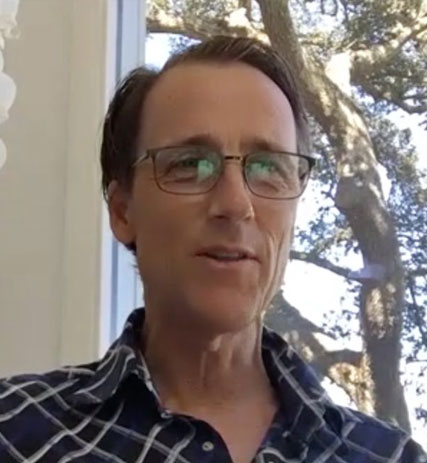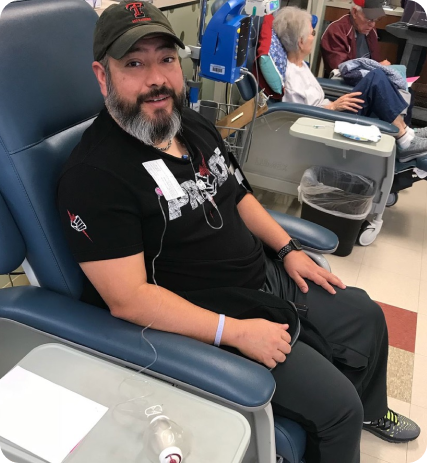
When Steve Melen was in his late 30s, life seemed to be moving along the perfect track. He had a job, a wife, and a nine-month-old baby at home. So when he started experiencing vague stomach discomfort and pain, he—and his doctors—chalked it up to stress.
"I didn't think the cancer word at all," Steve recalls. For months, he managed the symptoms with medication, assuming the pressure of a new baby and home renovations were simply taking their toll.
It wasn’t until nine months later, when the pain became unbearable, that he drove himself to the emergency room. Within 24 hours, his world flipped upside down. Blood tests revealed severe anemia, and subsequent scans confirmed the unthinkable: Stage IV stomach cancer.
"It went from nothing to everything in 24 hours," Steve says.
The Fight for Survival
Steve’s treatment plan was aggressive. Just a week after his 38th birthday—a date he fought to keep free of surgery so his "death day" wouldn't match his birthday—he underwent a massive operation. Surgeons removed his entire stomach, his spleen, half of his pancreas, and a third of his esophagus.
Though the surgery was technically a success, complications followed. A leak led to sepsis, causing Steve to "code blue." He woke up a week later strapped to a hospital bed, having narrowly survived.
But surgery was only the beginning. Steve endured a grueling regimen of chemotherapy and radiation that ravaged his body, dropping his weight to just 95 pounds. "Each one was harder than I thought," he admits. At his lowest point, he broke down in his radiologist's office, confessing he didn't know if he could take anymore. His doctor, seeing his condition, ended the treatment right there, telling him, "We’re done today. You’ve done enough."
The Hidden Battle: Mental Health and Addiction
While the physical scars were healing, a different battle was brewing. Steve candidly opens up about the "dark times" that many patients face but few discuss: the crushing anxiety, depression, and the guilt of being a burden on loved ones.
"I didn't see my future... it was dark," he shares.
To cope with the immense physical pain and emotional trauma, Steve became dependent on pain medication, an addiction that eventually required him to check into rehab. The strain of the illness and its aftermath also took a toll on his marriage, leading to divorce.
Steve emphasizes that this psychosocial toll is a critical part of the cancer journey that needs more attention. "Everyone is scared," he says. "You feel guilty putting other people through this... but you can't go it alone."
Finding His "Killer Grace"
Recovery didn't happen overnight, but a spark of hope came from an unlikely source: a racehorse.
Needing something to look forward to, Steve bought a small share in a racehorse named Killer Graces. On the day of a major race in Los Angeles, Steve watched as his horse crossed the finish line first.
"I found some excitement and inspiration in something that was out of my control," he explains. That win was a turning point. It gave him a reason to cheer and marked the beginning of his new life. Around the same time, he reconnected with his high school sweetheart, who would eventually become his wife.
Life as a Survivor and Advocate
Today, Steve is a 12-year survivor, a mentor for other patients, and the author of the book Killer Graces, which details his journey through cancer, addiction, and recovery.
His advice to newly diagnosed patients is simple but powerful:
- Be your own advocate: "You have to be the captain of your ship."
- Acknowledge the mental toll: Don't hide the anxiety or depression; seek help for the emotional side of the disease just as you do for the physical.
- Find your community: Connect with mentors and support groups. Seeing someone who has made it to the other side can provide the light at the end of the tunnel.
"I don't have problems now; I just have challenges that I know I can get through," Steve says. "Life is short... you don't waste your time on things that just don't matter."
Learn more about Debbie’s Dream Foundation.