
ESMO 2026: What the Latest GI Cancer Research Could Mean for Patients

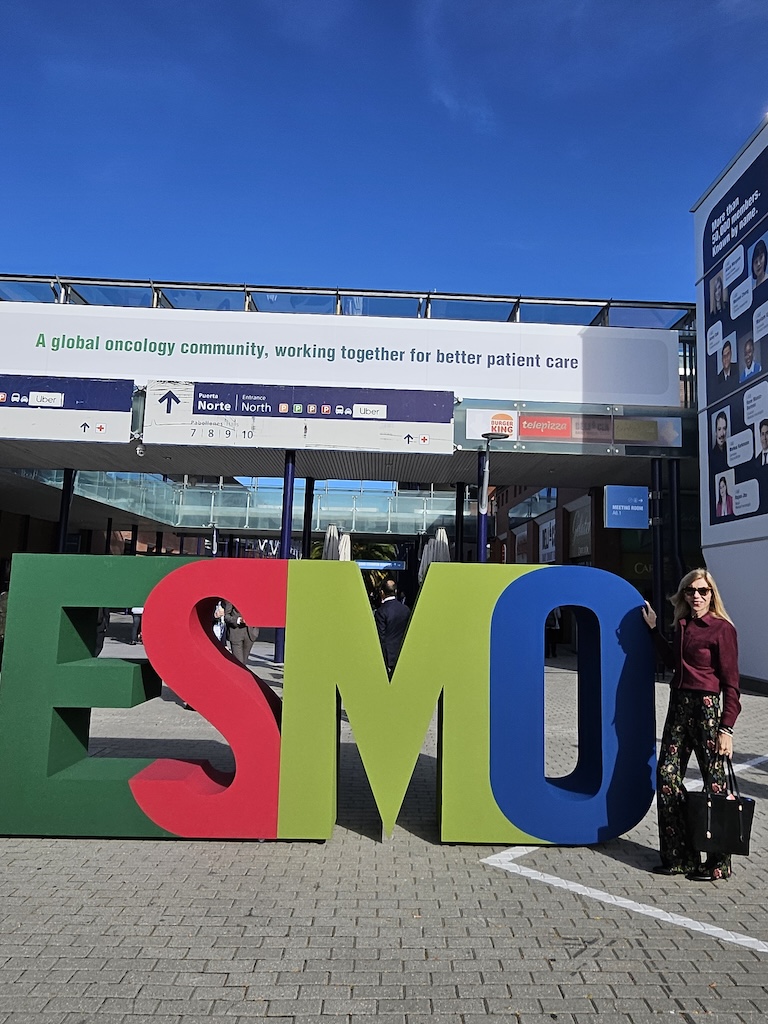
New cancer research can bring hope, but scientific announcements often come with unfamiliar terms and long drug names. At the 2026 European Society for Medical Oncology (ESMO) Congress, researchers shared findings across gastrointestinal (GI) cancers. Some may help guide care today; others are early steps that need more study.
Here is what patients and families should know, including where research is moving forward and where more work is needed.
Three developments to know about
Rectal cancer: a new option for a specific group of patients
In October 2026, the U.S. Food and Drug Administration (FDA) granted accelerated approval to dostarlimab (Jemperli) for certain adults with stage II or III rectal cancer whose tumors have a feature called MSI-H or dMMR. These terms describe changes in how cancer cells repair mistakes in their DNA. A test can identify whether a tumor has these features.
In the AZUR-1 study, 68% of 144 patients with at least 12 months of follow-up had no cancer detectable on clinical assessment for a sustained 12-month period. A separate measure combining clinical and tissue-based responses was 76%. These numbers measure different outcomes and should not be added together.
Why it matters: Some eligible patients may be able to avoid or delay treatments such as chemotherapy, radiation or surgery. This does not apply to every rectal cancer. Decisions about treatment and close follow-up require an experienced care team. Accelerated approval also means additional evidence is needed to confirm clinical benefit. [1, 2]
Pancreatic cancer: encouraging early results from a targeted treatment
Researchers reported early results for INCB161734, a medicine being studied for pancreatic cancer with a particular change in the KRAS gene called G12D. In a small, early-stage study, 81% of patients receiving INCB161734 with a chemotherapy combination called modified FOLFIRINOX had a confirmed tumor response. A higher figure of 89% included responses still awaiting confirmation.
Why it matters: Researchers are learning how to target genetic changes that drive some pancreatic cancers. These results are promising, but this was not a randomized comparison and it is too soon to know whether the treatment helps people live longer. A larger study, DAWN-303, is evaluating the approach. [3]
Colorectal cancer: research for patients who have had fewer immunotherapy options
Some colorectal tumors are called microsatellite-stable (MSS). These cancers often do not respond as well to currently used immunotherapies. An early study of INCA33890 with chemotherapy and bevacizumab reported tumor responses in 71% of 42 patients. Another small study found a 36% response rate among 22 previously treated patients with KRAS G12D-mutated colorectal cancer who received INCB161734 and cetuximab.
Why it matters: These approaches may eventually expand treatment choices. For now, both findings come from small, early studies without comparison groups. More research is needed to establish how well they work and for whom. [3]
Research updates across GI cancers
Not every study announced a new treatment. Some helped clarify which approaches may work, which need further testing, and where important gaps remain.
Esophageal cancer
The SANO study explored whether some patients who appeared cancer-free after chemotherapy and radiation could be closely monitored instead of having immediate surgery. KEYNOTE-975 and ARION PRODIGE 67 studied adding immunotherapy to chemotherapy and radiation. The results highlight the need to weigh cancer control, side effects and careful follow-up; monitoring instead of surgery is not appropriate for everyone.
Stomach (gastric) and gastroesophageal junction cancers
Studies called CLARITY-Gastric 01 and G-HOPE-001 explored medicines aimed at a tumor marker called CLDN18.2. HERIZON-GEA-01 and KC-WISE studied treatments directed at HER2, another marker found in some tumors. LOMAC examined whether a shorter course of chemotherapy after surgery could be enough for some patients. These findings reinforce the value of asking which tumor tests may help guide treatment; not all medicines studied are approved.
Pancreatic cancer
RASolute 302 studied daraxonrasib compared with chemotherapy for people who had already received treatment for metastatic pancreatic cancer. AMPLIFY-7P tested a KRAS-directed vaccine after surgery but did not meet its main study goal. The newer INCB161734 findings are described above. Together, these studies show progress alongside important unanswered questions.
Neuroendocrine tumors and carcinomas
Studies explored combinations involving surufatinib and serplulimab, as well as medicines called opamtistomig and obrixtamig (DAREON-7). VMT-alpha-NET explored a treatment that delivers radiation to targeted cells. Neuroendocrine tumors (NETs) and neuroendocrine carcinomas (NECs) are different diseases; research findings for one should not automatically be applied to the other.
Biliary tract cancer and cholangiocarcinoma
HARMONi-GI1 compared two immunotherapy-based chemotherapy combinations. COMPANION-002 investigated tovecimig-based treatment. ACTICCA-1 studied chemotherapy after surgery, while OPTIMUM examined treatment for tumors with certain DNA-repair changes. These studies address different stages and situations, so patients should ask which findings, if any, are relevant to their diagnosis.
Small bowel cancer
No dedicated, major late-breaking result for small bowel adenocarcinoma was confirmed in the source recap. This cancer is different from neuroendocrine tumors that arise in the small intestine. More disease-specific research and clinical trial opportunities are needed.
Liver cancer
EMERALD-3 and LEAP-012 explored combining medicines with a procedure that delivers treatment directly to tumors in the liver (TACE). C-CAR031 studied an experimental immune-cell treatment known as CAR-T therapy. Liver health is an important factor in determining which treatments may be appropriate.
Colon cancer
CheckMate 8HW studied two immunotherapy medicines, nivolumab and ipilimumab, for advanced colorectal cancers with MSI-H/dMMR features. IROCAS examined stronger chemotherapy after surgery; PRABITAS studied a different dosing schedule for existing medicines; and MONSTAR-SCREEN-3 investigated blood tests that look for tiny amounts of cancer DNA after treatment. New MSS and KRAS G12D studies are described above.
Rectal cancer
AZUR-1 is an important development for eligible patients with MSI-H/dMMR locally advanced rectal cancer. UNION also studied a treatment approach that included the immunotherapy drug camrelizumab. Patients should not assume that results in one molecular subtype apply to every rectal cancer.
Anal cancer
No specific major late-breaking anal cancer result was confirmed in this recap. Research into HPV-related cancer, immunotherapy, life after treatment and long-term side effects remains important.
Gallbladder cancer
The ACTICCA-1 study included people with gallbladder cancer as well as cholangiocarcinoma. Results for the overall group do not necessarily tell us how well a treatment works specifically for gallbladder cancer.
Appendiceal cancer
No major appendix-specific late-breaking study was confirmed in this recap. Appendix cancers are not all biologically the same as colon cancer, making dedicated research especially important.
What can patients take away from ESMO 2026?
The most useful next step is not to assume that every new treatment applies to you. Instead, consider asking your cancer care team: Has my tumor had the biomarker testing that could help guide treatment? Are any of these findings relevant to my cancer type and stage? Is there a clinical trial I should know about? How might treatment affect my everyday life?
At GI Cancers Alliance, we believe progress means more than new medicines. It means understandable information, access to appropriate testing and trials, and the chance for every patient to take part in decisions about their care—regardless of where they live.
The true measure of scientific progress is what becomes possible for patients and families worldwide.
Sources and important context
[1] U.S. FDA. Accelerated approval of dostarlimab for locally advanced rectal cancer (October 19, 2026). https://www.fda.gov/drugs/resources-information-approved-drugs/fda-grants-accelerated-approval-dostarlimab-locally-advanced-rectal-cancer
[2] Cercek et al. AZUR-1. Annals of Oncology (October 25, 2026). https://pubmed.ncbi.nlm.nih.gov/42927858/
[3] Incyte. ESMO gastrointestinal cancer research update (October 26, 2026). https://investor.incyte.com/news-releases/news-release-details/incyte-highlights-new-data-advancing-its-gastrointestinal-cancer
[4] ESMO Congress 2026 program. https://www.esmo.org/meeting-calendar/esmo-congress-2026
This overview summarizes research presented or discussed around ESMO 2026. Some treatments remain experimental; approvals and access vary by country. Study findings do not replace individualized medical advice.